
St Clements
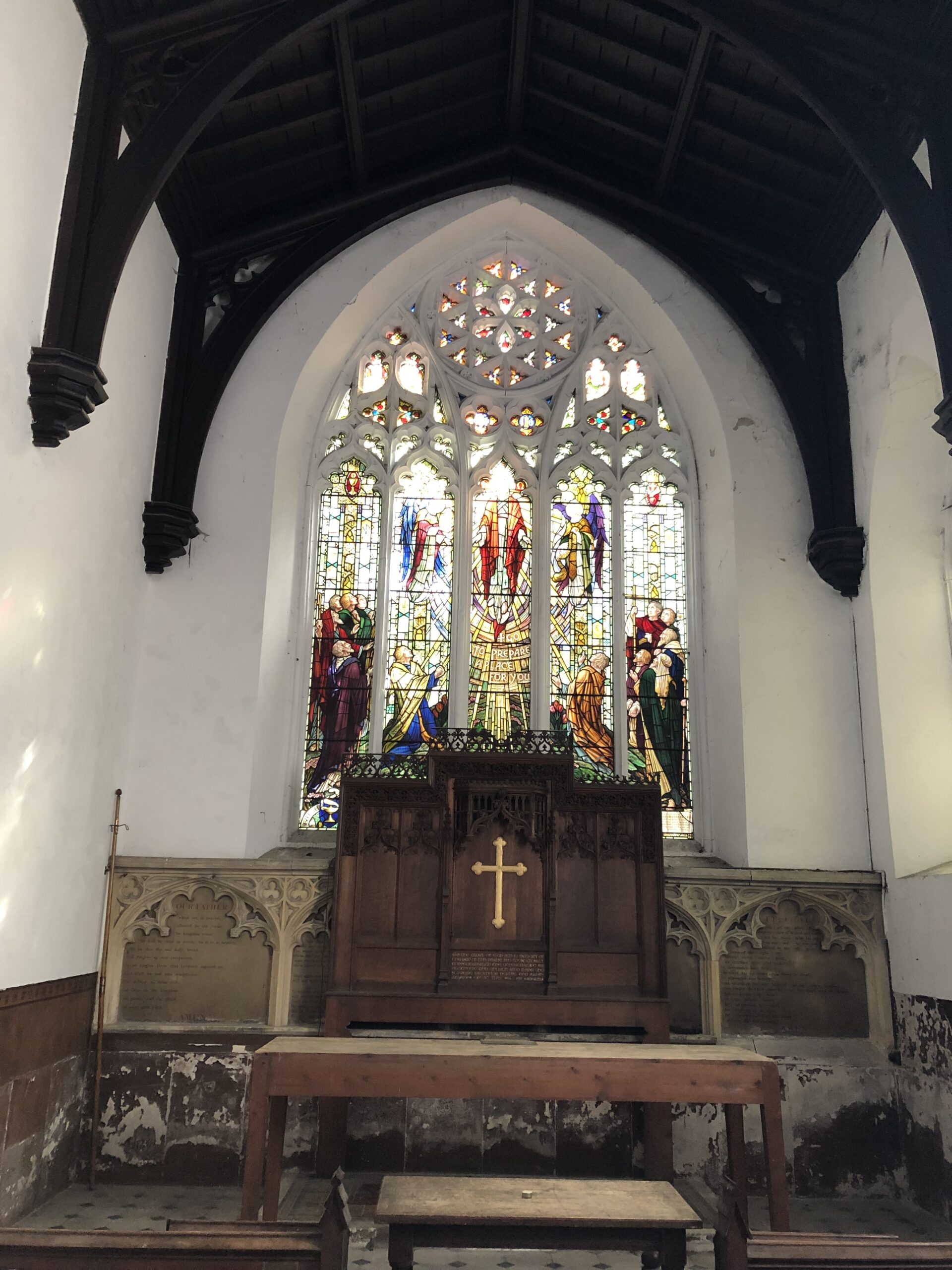
The East Window
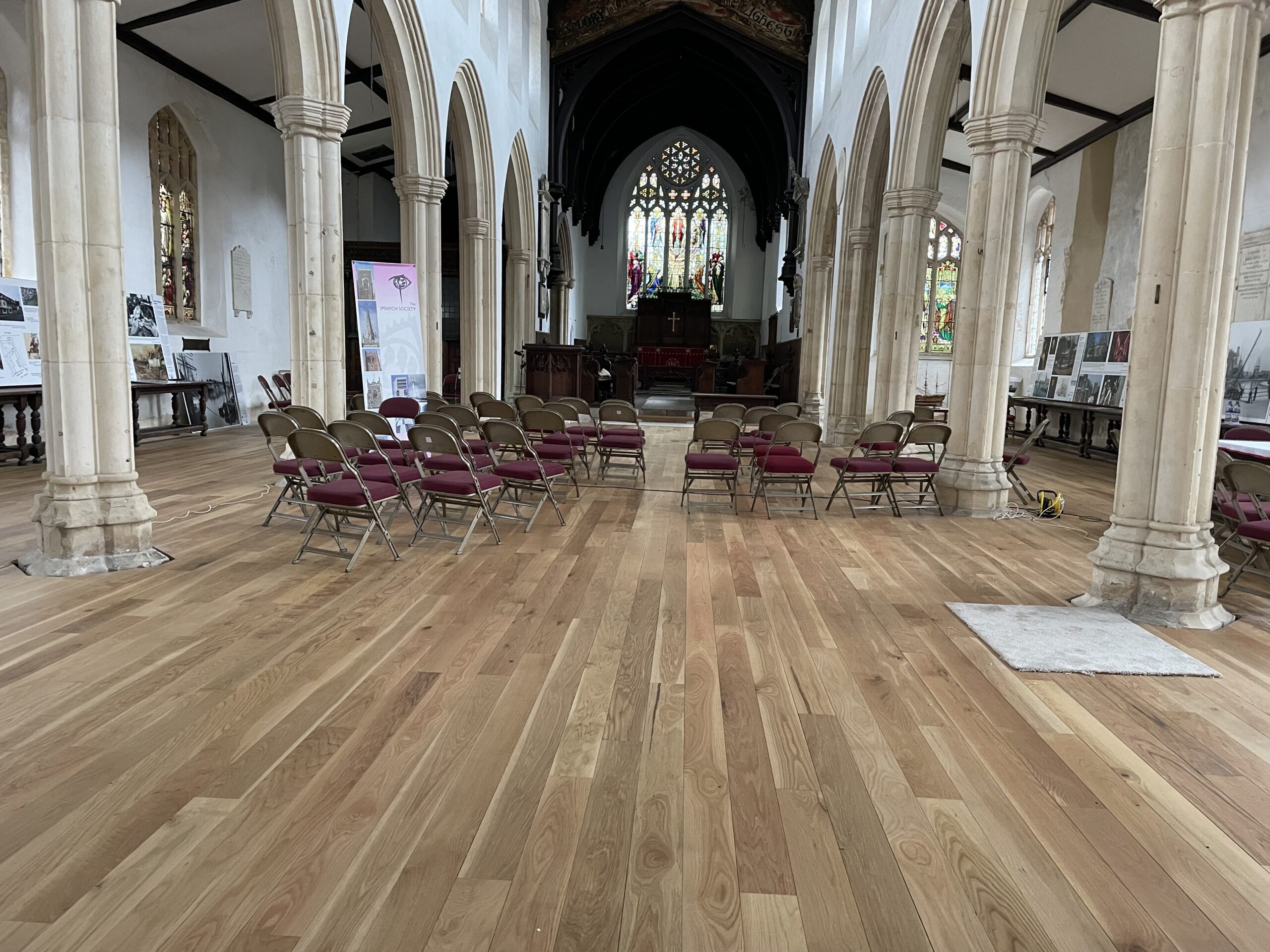
Looking to the east in St Clement’s church
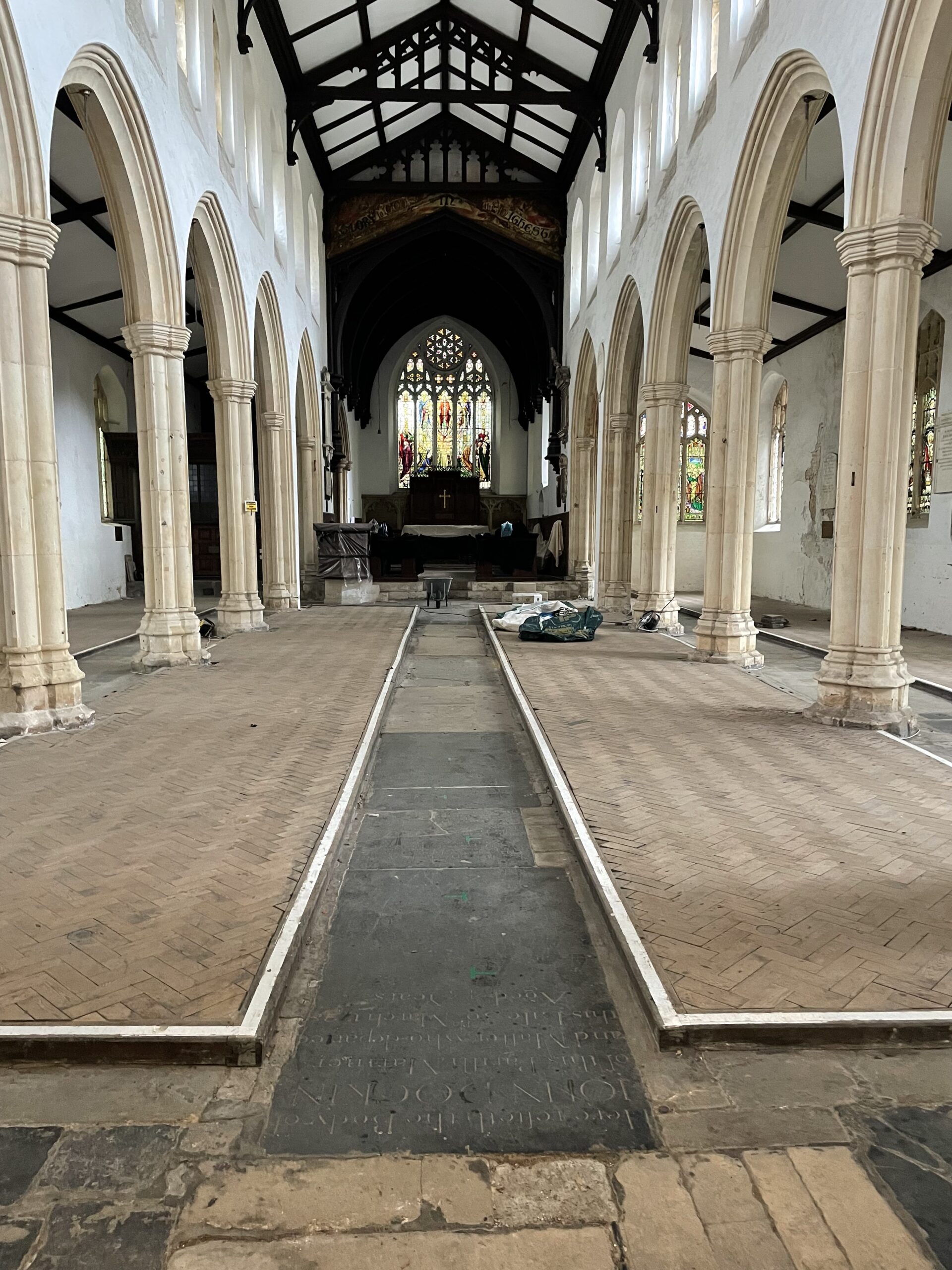
Looking west in St Clement’s in 2022
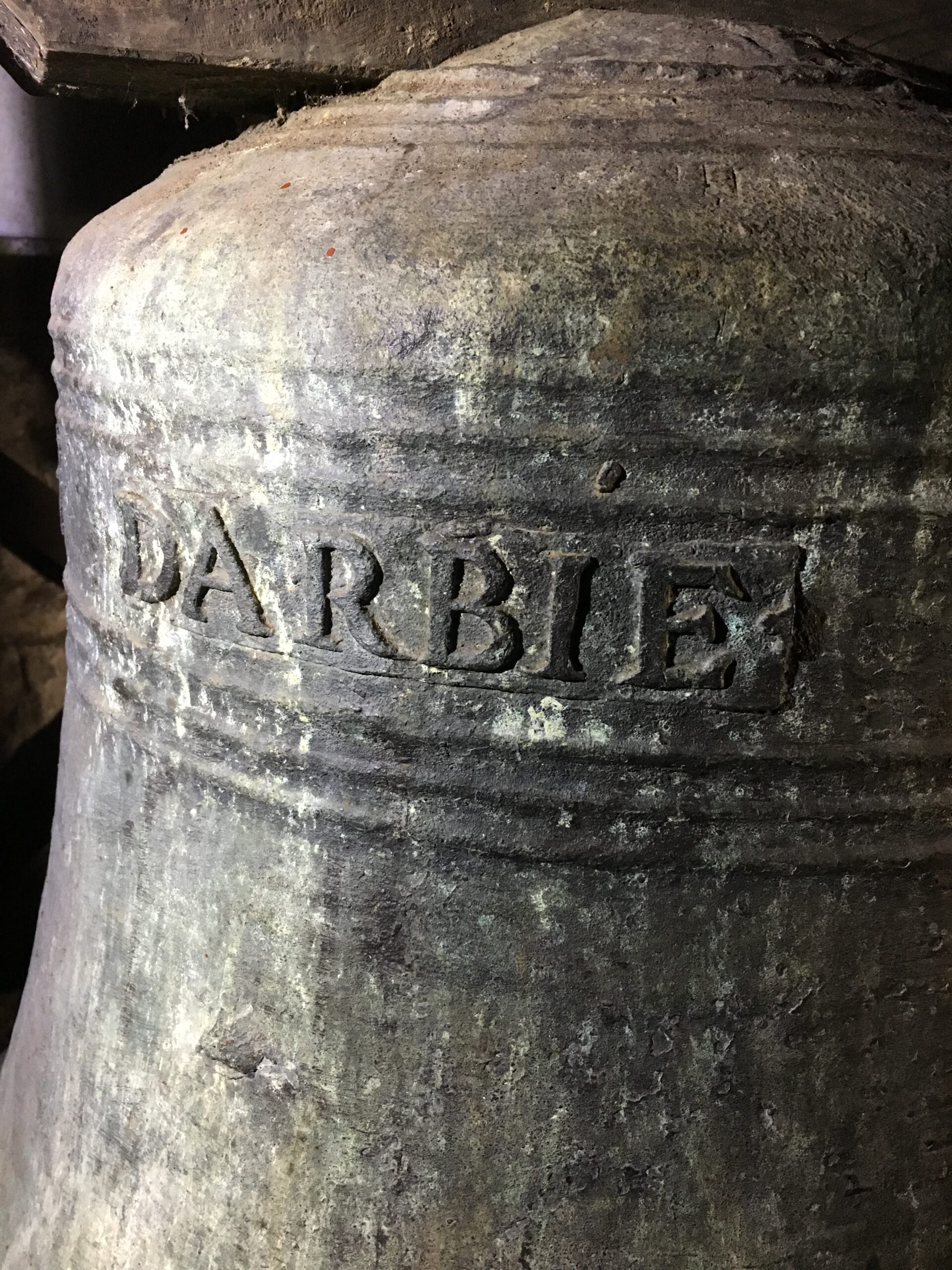
Inscription on one of the bells cast by John Darbie of Ipswich in 1660
St Clement’s Church
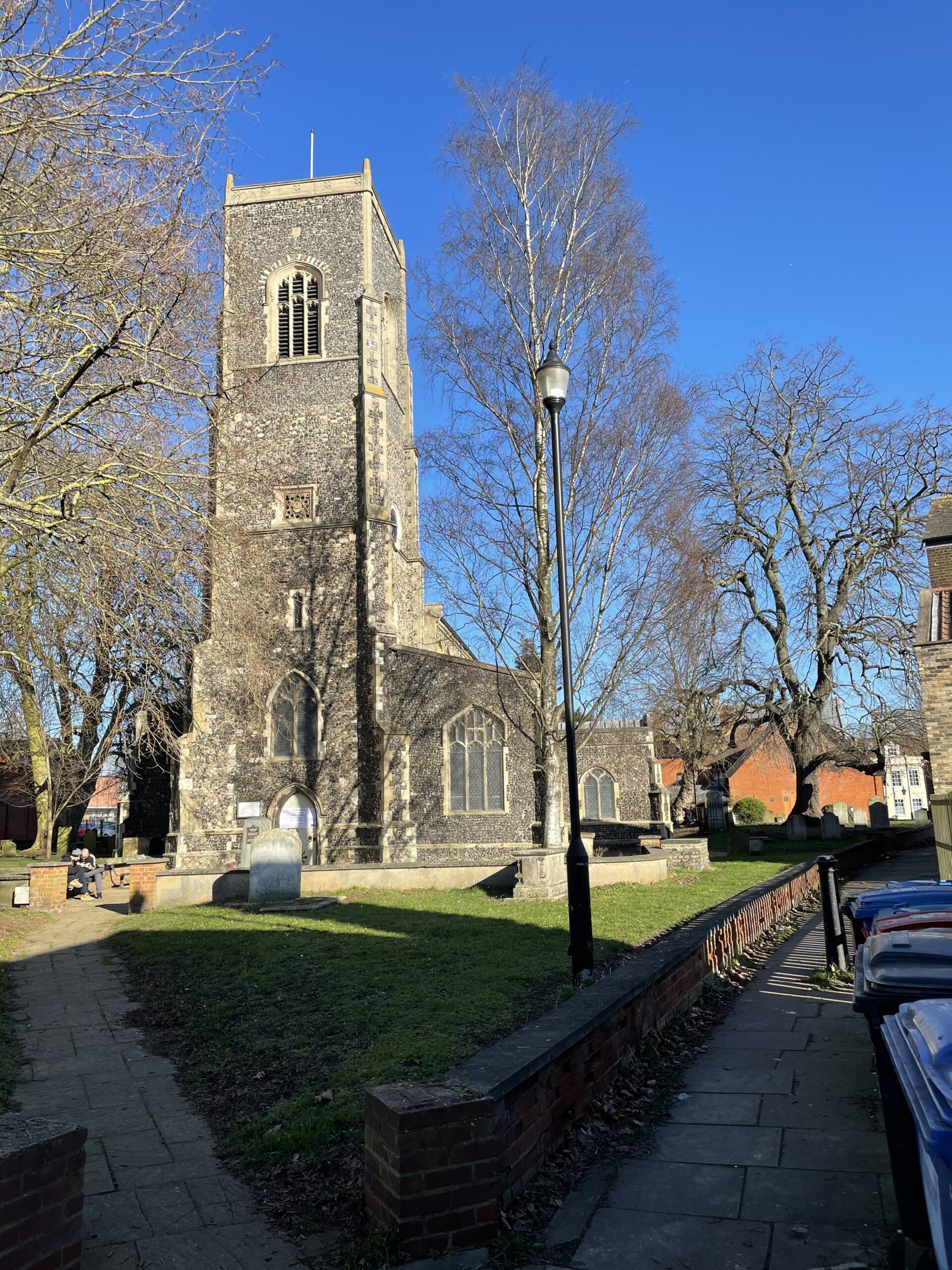
The main structure dates from the late 14th and early 15th centuries. It is the only church in Suffolk dedicated to St Clement of Rome.
In September 1995 St Clement’s church was badly damaged by fire, but the Trust was able to put it back in order. Almost two-thirds of the roof covering was lost, but the Victorian rafter sections only needed cleaning. The Royal Arms of Charles II (1661), and many other inscriptions and memorials have been cleaned and conserved. The tower has also been restored by the Trust. The anchor in the square opening is a symbol of the patron saint, a reminder that this was one of the mariners’ parish churches.
The black and white photos show Beating the Bounds of the parish in 1895.
The fifteenth century clerestory has single two-light windows set in a wall of flint and freestone-flushwork niches and pinnacles. Inside, look for the fine 15th century font, near which is the headstone of Thomas Cobbold, who brought his brewery from Harwich and used water from the fine springs in Holywells Park, (Ipswich, Suffolk) a warning on an amusing stone let into the wall of the south aisle, and several fine mural monuments in the chancel.
The church has been cared for by the Trust since 1981. Since 2022 the trust has carried out extensive works including a new floor and toilets, this has enabled the church to be available for hire. It has hosted private events, the Ipswich Beer Festival, the Ipswich Art Society, a vegan market and vintage clothing sales.
The main structure dates from the late 14th and early 15th centuries. It is the only church in Suffolk dedicated to St Clement of Rome.
In September 1995 St Clement’s church was badly damaged by fire, but the Trust was able to put it back in order. Almost two-thirds of the roof covering was lost, but the Victorian rafter sections only needed cleaning. The Royal Arms of Charles II (1661), and many other inscriptions and memorials have been cleaned and conserved. The tower has also been restored by the Trust. The anchor in the square opening is a symbol of the patron saint, a reminder that this was one of the mariners’ parish churches.
The black and white photos show Beating the Bounds of the parish in 1895.
The fifteenth century clerestory has single two-light windows set in a wall of flint and freestone-flushwork niches and pinnacles. Inside, look for the fine 15th century font, near which is the headstone of Thomas Cobbold, who brought his brewery from Harwich and used water from the fine springs in Holywells Park, (Ipswich, Suffolk) a warning on an amusing stone let into the wall of the south aisle, and several fine mural monuments in the chancel.
The church has been cared for by the Trust since 1981. Since 2022 the trust has carried out extensive works including a new floor and toilets, this has enabled the church to be available for hire. It has hosted private events, the Ipswich Beer Festival, the Ipswich Art Society, a vegan market and vintage clothing sales.
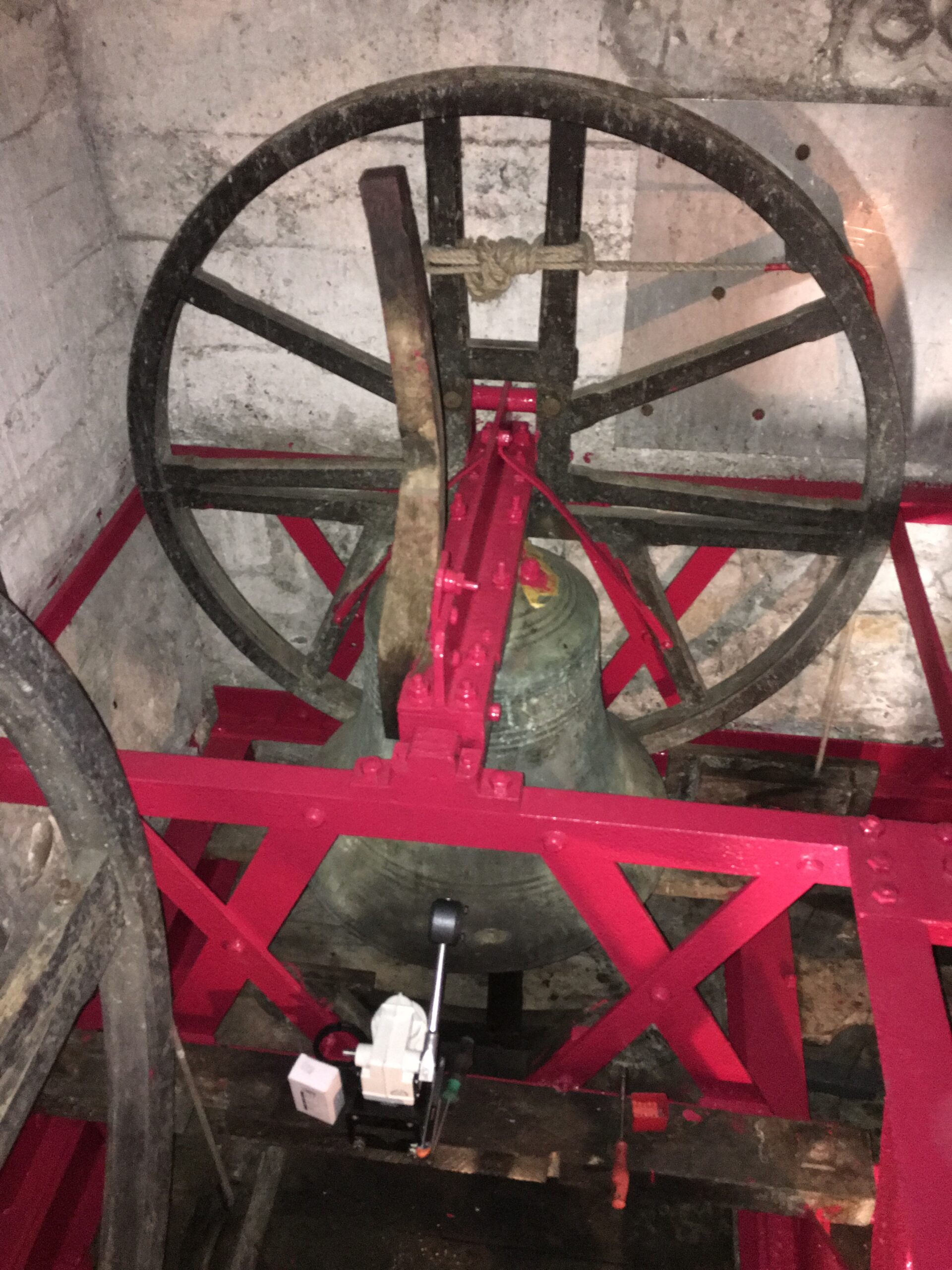
The treble, cast by John Darbie of Ipswich in 1660, note D#
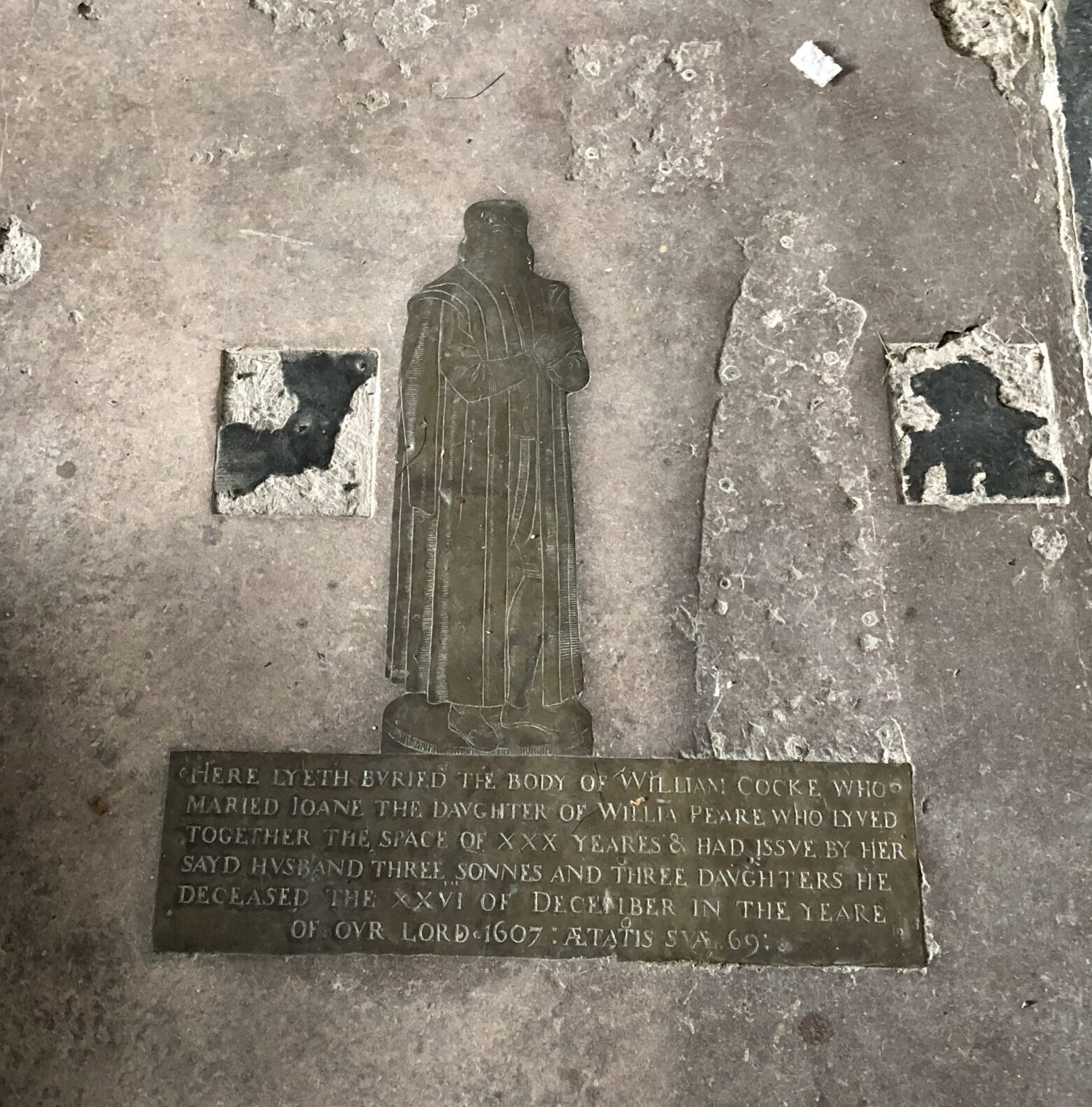
Brass commemorating William and Joane Cooke, he died 26th December 1607
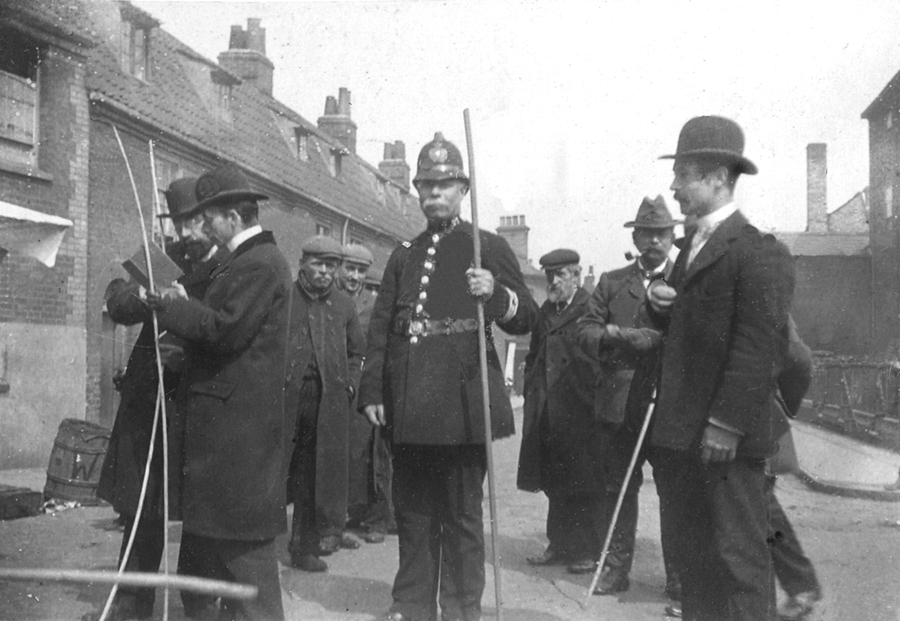
PC Pyatt conscious of his dignity throughout
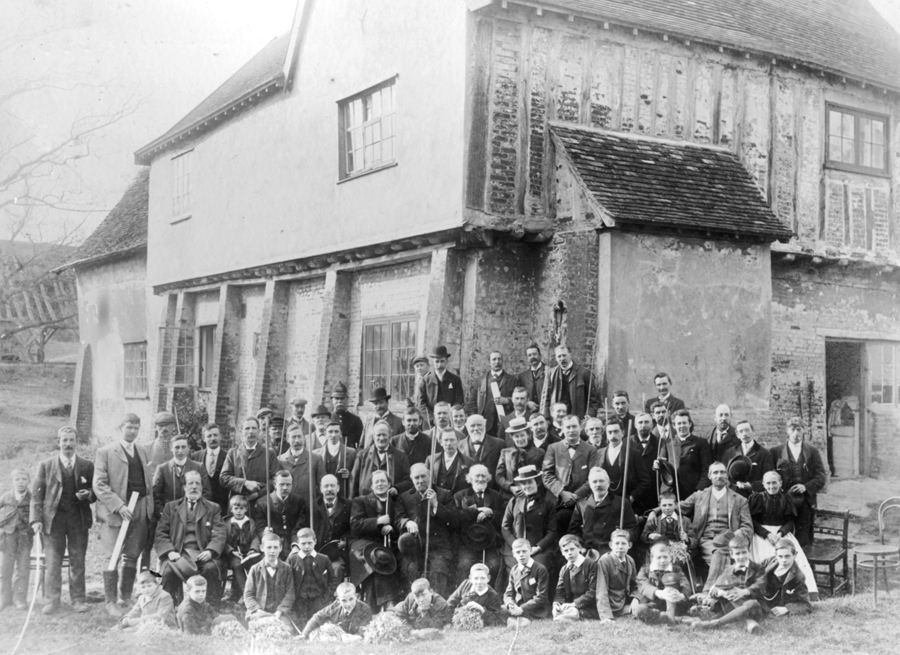
Outside Pond Hall Farm
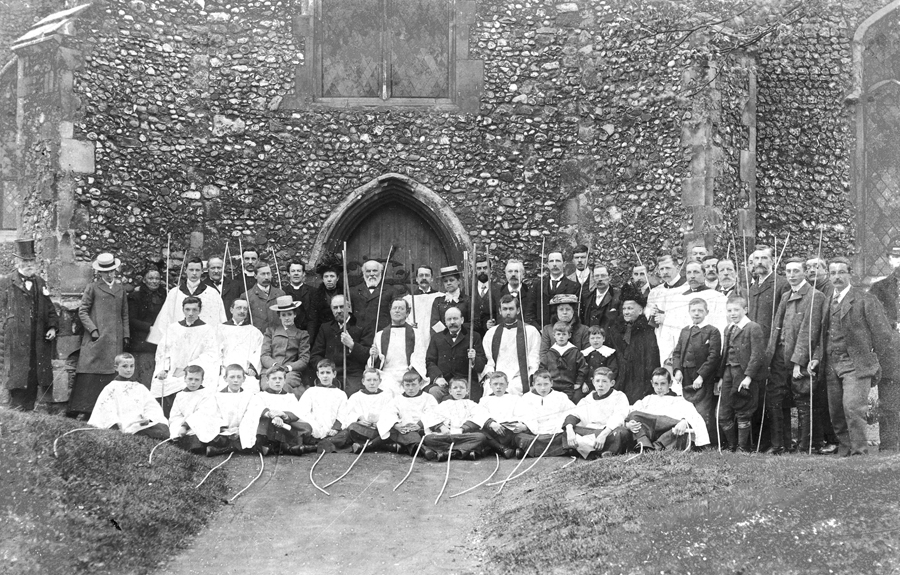
Group at the Church before setting off
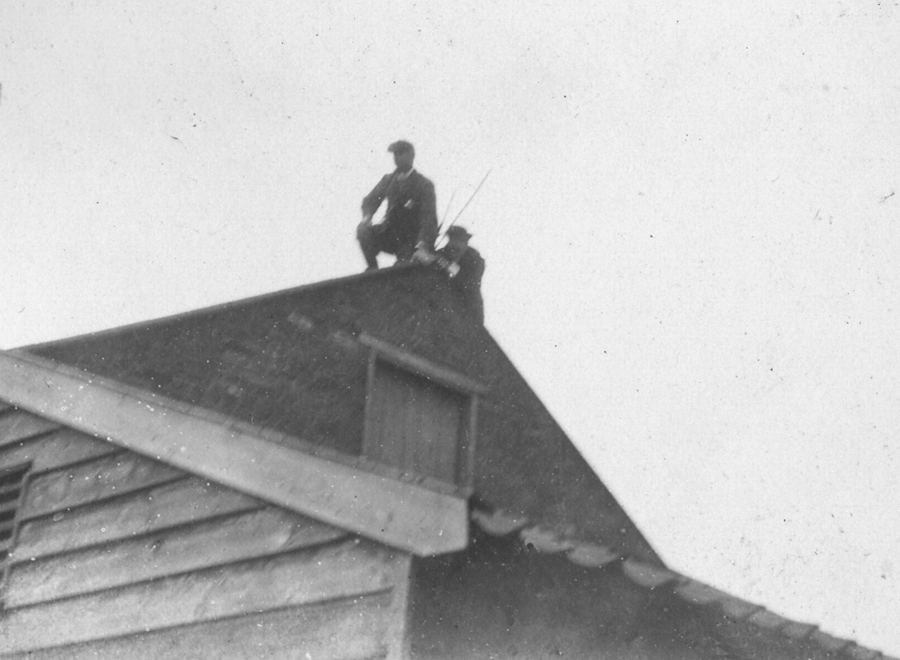
A layman and a cleric on Crisp & Smiths warehouse
Brass commemorating William and Joane Cooke, he died 26th December 1607
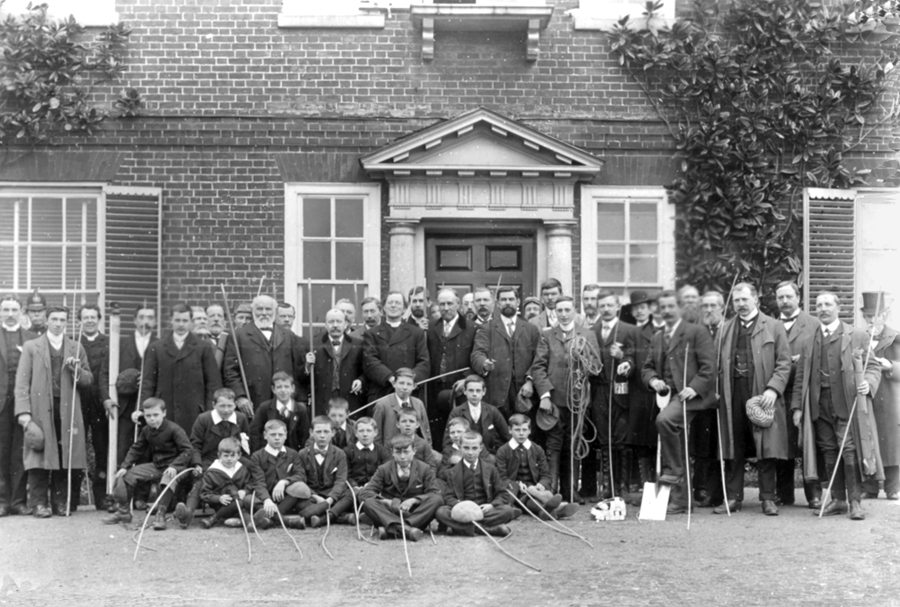
Outside Mrs. Byles’ house, Hill House
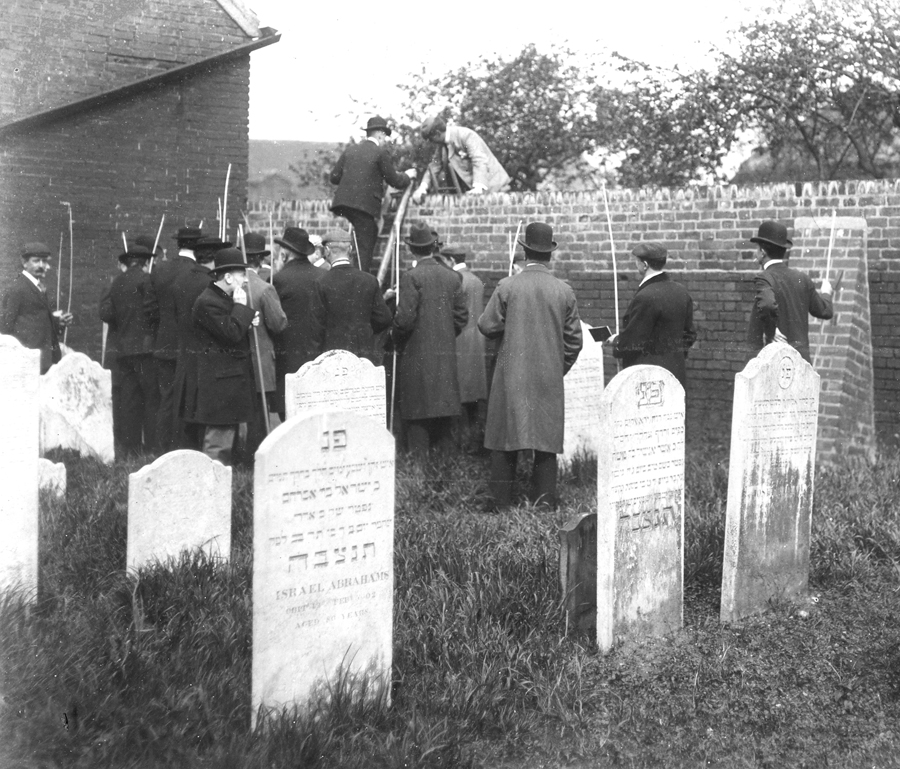
Climbing the far wall of the Jewish Cemetery
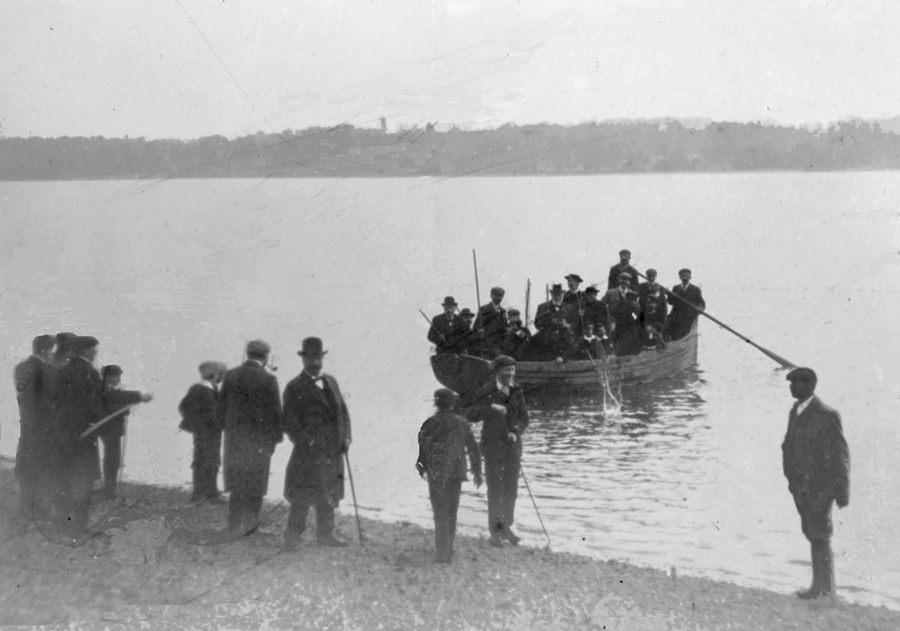
Embarking for Wherry Quay